roland beamont: The Legendary RAF Fighter Pilot and Test Aviation Pioneer
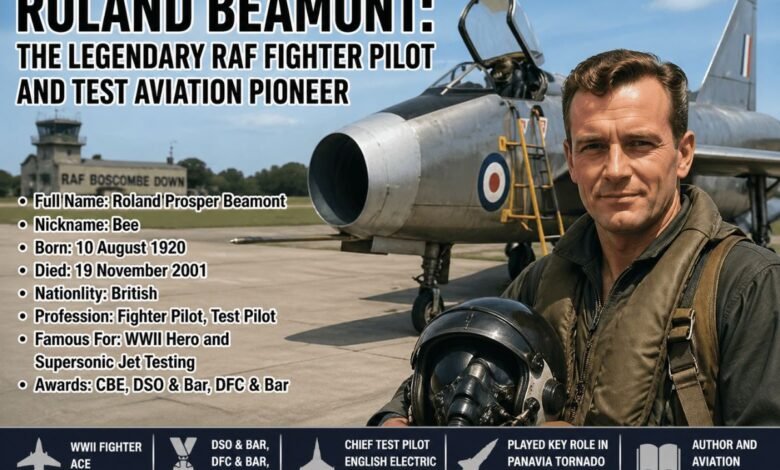
Table of Contents
ToggleIntroduction
Roland Beamont, famously known as “Bee,” stands as one of the most respected figures in British aviation history. From his heroic role in World War II to his groundbreaking contributions as a test pilot, Beamont’s life reflects courage, intelligence, and innovation. His legacy continues to inspire aviation enthusiasts and historians around the world.
Early Life and Background
Childhood and Education
Roland Prosper Beamont was born on 10 August 1920 in England. From a young age, he showed a deep interest in engineering and flying. His curiosity about aircraft and mechanics played a key role in shaping his future career.
Entry into Aviation
Beamont joined the
Royal Air Force before the outbreak of
World War II. His early training revealed exceptional flying skills, and he quickly advanced through the ranks.
Roland Beamont in World War II
Combat Roles and Missions
During World War II, Beamont became a skilled fighter pilot known for his discipline and tactical brilliance. He flew numerous combat missions across Europe and gained a reputation for his calm decision-making under pressure.
Aircraft He Flew
Beamont piloted several important aircraft, including:
- Hawker Hurricane
- Hawker Typhoon
- Hawker Tempest
These aircraft were crucial in gaining air superiority and supporting ground forces.
Role in V-1 Interceptions
One of his most notable achievements was intercepting German V-1 flying bombs. These unmanned weapons posed a serious threat to Britain, and Beamont’s efforts played a vital role in defending the country.
Awards and Military Recognition
Honors Received
Roland Beamont’s bravery and leadership earned him several prestigious awards:
- Commander of the Order of the British Empire (CBE)
- Distinguished Service Order (DSO & Bar)
- Distinguished Flying Cross (DFC & Bar)
What These Awards Mean
These honors reflect repeated acts of courage, outstanding leadership, and exceptional flying skills during wartime operations. Receiving both the DSO and DFC twice is a rare achievement, highlighting his extraordinary contributions.
Transition to Test Pilot Career
Moving Beyond Combat
After World War II, Beamont shifted his focus to experimental aviation. His deep understanding of aircraft and fearless personality made him an ideal test pilot.
Key Contributions
He became chief test pilot for the
English Electric Lightning, one of Britain’s first supersonic fighter jets. His work helped shape the future of high-speed aviation.
He also contributed to the development of the
Panavia Tornado, a major aircraft used during the Cold War era.
Importance of His Work
Beamont’s testing ensured aircraft were safe, efficient, and combat-ready. His feedback helped engineers improve performance and reliability, making modern aviation safer.
Leadership and Influence in Aviation
Industry Impact
Beamont worked closely with aircraft manufacturers and played a key role in advancing British aviation technology. His experience as both a combat pilot and test pilot gave him unique insights.
Aviation Writing and Knowledge Sharing
Later in life, he became an author and aviation expert. He wrote about his experiences, offering valuable lessons for future generations of pilots and engineers.
Personal Life and Family
Family Background
While Roland Beamont kept much of his personal life private, he was known to value family deeply. His life outside aviation was relatively low-profile compared to his professional achievements.
Carol Beamont – Daughter of Roland Beamont
One related keyword often searched is carol beamont daughter of roland. Carol Beamont is known as his daughter, though detailed public information about her life remains limited. Unlike her father, she stayed away from the spotlight, maintaining a private life.
Legacy of Roland Beamont
A True Aviation Pioneer
Roland Beamont’s legacy lies in two major areas:
- His heroic contributions during World War II
- His groundbreaking work in jet aircraft development
Influence on Modern Aviation
Many modern aircraft technologies owe their development to early test pilots like Beamont. His work helped bridge the gap between propeller-driven aircraft and supersonic jets.
Quick Info About Roland Beamont
- Full Name: Roland Prosper Beamont
- Nickname: Bee
- Birth Date: 10 August 1920
- Death Date: 19 November 2001
- Profession: Fighter Pilot, Test Pilot
- Nationality: British
- Famous For: WWII hero and supersonic jet testing
- Awards: CBE, DSO & Bar, DFC & Bar
FAQs About Roland Beamont
Who was Roland Beamont?
Roland Beamont was a British fighter pilot and test pilot known for his service in World War II and his contributions to modern jet aviation.
Why is Roland Beamont important?
He played a key role in defending Britain during WWII and later helped develop advanced jet aircraft, making aviation safer and more efficient.
What aircraft did he fly?
He flew several aircraft, including the Hawker Hurricane, Hawker Typhoon, and Hawker Tempest.
What awards did he receive?
He received multiple honors, including the Distinguished Service Order and Distinguished Flying Cross, both awarded twice.
Who is Carol Beamont?
Carol Beamont is known as the daughter of Roland Beamont, though she maintains a private life with limited public information available.
Conclusion
Roland Beamont remains a symbol of bravery, innovation, and excellence in aviation history. From his fearless combat missions to his pioneering work as a test pilot, his contributions shaped the future of air travel and military aviation. His story is not just about flying aircraft—it is about pushing boundaries, embracing challenges, and leaving a lasting legacy.