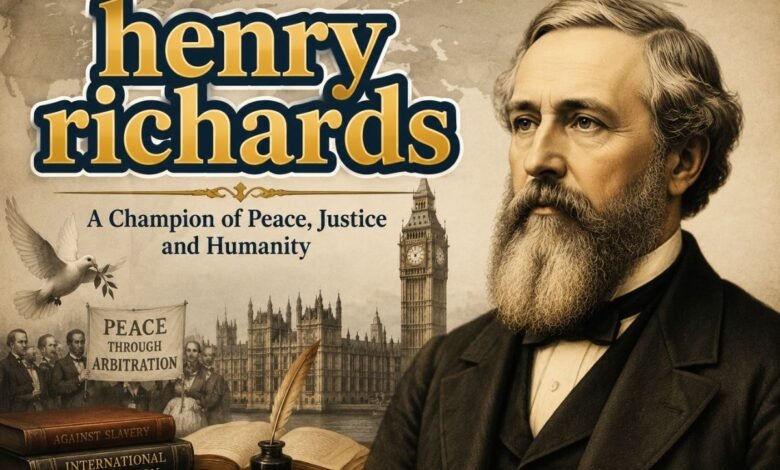
Henry Richards: Champion of Peace, Parliamentarian, and Advocate for Humanity
Introduction
Henry Richards was a remarkable 19th century leader whose life was defined by faith, conviction, and commitment to peace. Known widely as the “Apostle of Peace,” Richards spent decades working to end war through peaceful means and played a major role in promoting international arbitration as an alternative to armed conflict. His influence extended beyond activism into British politics, where he served with distinction as a Member of Parliament.
This article explores Henry Richards’ life, his major achievements, and enduring impact on international peace efforts and parliamentary reforms.
Henry Richards remains one of the most influential figures in 19th century British history. A devout Congregational minister, tireless peace activist, and dedicated Member of Parliament, Richards’ work shaped the global peace movement and strengthened nonconformist values in Britain and Wales. In this detailed and engaging article, we explore his life, philosophy, and lasting legacy.
Quick Info: Henry Richards
- Full Name: Henry Richard
- Born: April 3, 1812
- Died: August 20, 1888
- Professions: Congregational Minister, Peace Activist, Member of Parliament
- Known For: Leading the Peace Society, advocating international arbitration, fighting for anti‑slavery and religious equality causes
- Political Alignment: Liberal Party
Early Life and Education
Henry Richards was born on April 3, 1812, in a small Welsh town. Raised in a deeply religious family, he was shaped early on by Christian values and a sincere commitment to serving others. Richards’ upbringing in Wales instilled a strong sense of cultural identity and a passion for the betterment of society.
Family and Upbringing
Richards was influenced by his father, a devoted minister, who emphasized moral integrity and public service. These early influences would later guide Richards’ lifelong dedication to humanitarian causes.
Academic Foundations
Richards pursued higher religious education and received training to become a Congregational minister. His academic studies focused on theology, ethics, and the art of public speaking—skills which served him well in his later advocacy work.
Rise as a Congregational Minister
Henry Richards began his professional life as a Congregational minister, nurturing the spiritual lives of his congregations and advocating for justice in his sermons. His role as a minister was deeply intertwined with his emerging vocation as a voice for peace.
Ministry and Moral Leadership
As a minister, Richards spoke openly about the moral dangers of war and the importance of compassion. He believed that religious faith demanded active efforts to promote peace and reduce human suffering.
Impact on Communities
Richards’ leadership within the Congregational community helped broaden the influence of nonconformist churches beyond spiritual life and into social reform. His commitment to service inspired many others within religious circles to adopt causes related to peace and justice.
The Peace Advocate: Secretary of the Peace Society
One of the most impactful chapters of Henry Richards’ life was his service as Secretary of the Peace Society. Richards took on this role in 1848 and led the organization for nearly four decades.
A Revolutionary Vision
At a time when warfare was seen as inevitable or honorable, Richards championed a revolutionary idea: that nations could and should resolve disputes without resorting to violence. He promoted international arbitration—the concept of settling conflicts through impartial mediators rather than through battles.
Building a Global Movement
Under Richards’ leadership, the Peace Society grew in international prominence. He helped organize peace congresses in major European cities and cultivated alliances among thinkers, activists, and politicians who shared his commitment to ending armed conflict.
Legacy in Peace Thinking
Richards’ advocacy extended beyond pamphlets and speeches. His work contributed to a growing philosophical shift toward diplomacy and legal processes in international disputes. The seeds he helped plant would eventually grow into modern institutions and practices that encourage peaceful conflict resolution.
Parliamentary Career and Political Influence
In 1868, Henry Richards brought his message from religious platforms to the national stage when he was elected Member of Parliament.
Serving as a Liberal MP
Richards represented his constituency as a member of the Liberal Party. His role in Parliament allowed him to push for reforms that aligned with his lifelong convictions—foreign peace, religious freedom, and human rights.
Promoting Religious and Social Reforms
As a nonconformist MP, Richards advocated for equal treatment of all religious denominations. He challenged the privileged position of state churches and called for broader legal recognition of religious diversity.
Championing Arbitration in Government
Richards used his parliamentary platform to formalize the concept of international arbitration in British public life. His efforts helped make peace advocacy not just a moral issue but a political priority.
Anti‑Slavery Work and Humanitarian Efforts
Although best known for his peace work, Henry Richards also contributed significantly to anti‑slavery campaigns.
Moral Opposition to Slavery
Richards regarded slavery as one of humanity’s greatest injustices. He spoke against it, participated in rallies, and used his moral authority to influence public opinion against human bondage.
Support without Violence
Importantly, while Richards supported the abolition of slavery, he maintained his philosophical opposition to using war as a means to achieve it. His approach focused on persuasion, legislation, and moral pressure rather than force.
Personal Philosophy and Beliefs
Henry Richards was driven by a core belief that ethical principles should guide both personal life and national policy.
Faith as Foundation
Richards’ deep Christian faith underpinned all his work. For him, the teachings of compassion, justice, and universal love were not optional virtues—they were the basis for a better world.
Ethics in Public Life
Richards believed that people in public office should be held to high moral standards. He saw no division between spiritual integrity and civic responsibility.
Death and Lasting Legacy
Henry Richards died on August 20, 1888, leaving behind a remarkable legacy.
Final Years
Richards continued his peace advocacy and political work until his final days. Even in poor health, he remained committed to the causes that defined his life.
Impact on Future Generations
Richards’ contributions helped shape the emerging global peace movement. His promotion of arbitration as a viable alternative to war laid intellectual and moral groundwork that would later influence international institutions dedicated to peaceful conflict resolution.
Cultural Recognition
Today, Richards is remembered as a visionary whose leadership inspired both his contemporaries and future generations committed to peace and justice.
Frequently Asked Questions (FAQs) About Henry Richards
Who was Henry Richards?
Henry Richards was a Welsh Congregational minister and peace advocate who became a Member of Parliament. He is best remembered for leading the Peace Society and promoting international arbitration.
Why is Henry Richards famous?
Richards is famous for his tireless work to promote peace, reduce armed conflict, and integrate the idea of arbitration into international relations.
What was the Peace Society?
The Peace Society was an organization dedicated to ending war and encouraging peaceful dispute resolution. Henry Richards served as its long‑time secretary and expanded its reach across Europe.
Did Henry Richards support political reform?
Yes, as a Liberal MP, Richards advocated for religious equality, social justice, and measures to institutionalize peaceful diplomacy.
What is international arbitration?
International arbitration is a process through which conflicting parties agree to settle disputes via neutral third‑party decision‑makers rather than through armed conflict. Henry Richards was one of its earliest advocates.
How did Henry Richards view slavery?
Richards strongly opposed slavery on moral grounds but maintained his commitment to peaceful methods rather than war.
Conclusion
Henry Richards’ life was defined by steadfast dedication to peace, freedom, and moral integrity. Through religious leadership, organizational skill, and political passion, he transformed the way many viewed war and national conflict. His legacy continues to inspire advocates for peace and justice today. Henry Richards truly exemplifies the power of conviction and compassion in shaping history.