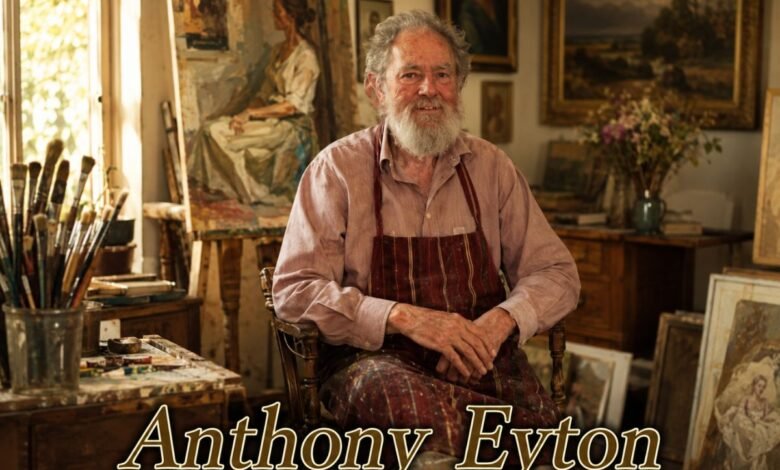
Anthony Eyton: A Master of British Figurative Painting
Introduction
Anthony Eyton is one of the most celebrated living British painters, known for his exceptional contributions to figurative art. With a career spanning over seven decades, Eyton’s work embodies a unique blend of classical observation and modern expression. His dedication to painting, his influence as an educator, and his vibrant interpretations of landscapes, interiors, and portraits have earned him a lasting place in British art history.
Early Life and Education
Anthony Eyton was born on 17 May 1923 in Teddington, Middlesex, England. He displayed an early passion for art, which led him to study Fine Art at Reading University in 1941. However, his academic journey was interrupted by World War II. From 1942 to 1947, Eyton served in the British Army, an experience that not only shaped his discipline but also broadened his perspective on life and observation—an aspect that would later reflect in his art.
After his military service, Eyton continued his education at the Camberwell School of Art from 1947 to 1950. During this period, he honed his skills in drawing, painting, and the study of figurative composition. His talent was quickly recognized when, in 1951, he was awarded the prestigious Abbey Major Scholarship, allowing him to work and study in Italy. This opportunity exposed him to European art traditions and influenced his vibrant color palette and dynamic approach to form.
Artistic Style and Philosophy
Anthony Eyton is primarily recognized as a figurative painter. His style is characterized by bold brushwork, vivid color, and a remarkable ability to capture light and space. While many of his contemporaries shifted toward abstraction, Eyton remained committed to the figurative tradition, believing in the importance of careful observation and emotional expression in painting.
His works often depict:
- Urban and rural landscapes
- Interiors and domestic scenes
- Gardens and natural environments
- Portraits and group compositions
Eyton’s philosophy emphasizes the importance of experience and observation. He once noted that every painting should reflect not just the visual reality but also the artist’s personal engagement with the subject. This dedication to both technique and emotion gives his work a timeless quality.
Career Highlights
Teaching and Mentorship
Eyton’s contribution to British art extends beyond his own painting. He began teaching at Camberwell School of Art in 1955, sharing his knowledge with young artists. Later, he became a tutor at the Royal Academy Schools, where he influenced multiple generations of painters. His teaching emphasized technical skill, rigorous observation, and the development of a personal artistic voice.
Exhibitions and Recognition
Eyton has been a regular participant in the Royal Academy Summer Exhibitions and has received critical acclaim for his solo and group exhibitions. In 1976, he became an Associate Royal Academician, and by 1986, he was a full Royal Academician. His works are held in numerous public collections, including the Tate, the British Museum, and the Imperial War Museum.
Awards and Honors
Throughout his career, Anthony Eyton has received several prestigious awards, such as:
- John Moores Painting Prize (1972)
- Charles Wollaston Award from the Royal Academy (1989)
- First Prize at the British International Drawing Biennale (1975)
- Appointed Officer of the Order of the British Empire (OBE) in recognition of his services to painting
These accolades highlight both his mastery of craft and his enduring influence in the art world.
Personal Life
Anthony Eyton has lived much of his life in Brixton, South London. He is known to be a private individual who draws inspiration from his immediate surroundings, including his home, garden, and local environment. Eyton was married to Mary Eyton, who shared his appreciation for the arts. Their partnership fostered a nurturing environment for creativity, and their family has been involved in various artistic endeavors.
Anthony Eyton Wife
Mary Eyton played a significant role in his personal life, providing support and inspiration that helped him maintain a prolific career. While Anthony Eyton’s life has largely been dedicated to his art, his relationship with his wife provided stability and motivation that complemented his artistic pursuits.
Influence and Legacy
Eyton’s work has had a lasting impact on contemporary British art. His dedication to figurative painting during an era dominated by abstract trends demonstrates his commitment to craft and observation. He has inspired countless students and fellow artists through both his teaching and his exhibitions. Even into his late 90s and early 100s, Eyton continued to produce new works, exemplifying a lifelong passion for creativity.
His legacy is also cemented in the major collections that house his paintings, ensuring that future generations can study and appreciate his contributions to the art world.
Quick Info
| Detail | Information |
|---|---|
| Full Name | Anthony John Plowden Eyton |
| Birth Date | 17 May 1923 |
| Birth Place | Teddington, Middlesex, England |
| Nationality | British |
| Education | Reading University, Camberwell School of Art |
| Scholarship | Abbey Major Scholarship (1951) |
| Profession | Figurative Painter, Art Educator |
| Awards | John Moores Painting Prize, Charles Wollaston Award, OBE |
| Royal Academy | Full Royal Academician (1986) |
| Spouse | Mary Eyton |
FAQs About Anthony Eyton
Q1: What is Anthony Eyton known for?
A1: He is known for his figurative paintings that include landscapes, interiors, still lifes, and portraits, and for his contribution as an art educator.
Q2: What style of painting does Anthony Eyton follow?
A2: Eyton follows a figurative style with strong influences from Post-Impressionism, emphasizing bold brushwork, vibrant color, and careful observation.
Q3: Has Anthony Eyton received any major awards?
A3: Yes, he has won the John Moores Painting Prize, the Charles Wollaston Award, and was appointed OBE for his services to art.
Q4: Did Anthony Eyton serve in the military?
A4: Yes, he served in the British Army from 1942 to 1947 during World War II.
Q5: Who is Anthony Eyton’s wife?
A5: He was married to Mary Eyton, who was a supportive partner throughout his long career.
Conclusion
Anthony Eyton remains a pillar of British figurative art. His dedication to observation, technical skill, and expressive painting has left a remarkable mark on the art world. Through his works, teaching, and influence, Eyton has contributed not only to the continuation of figurative painting but also to inspiring future generations of artists. His life story reflects resilience, creativity, and an enduring passion for the visual arts.