hanneli goslar: The Brave Holocaust Survivor Who Kept Anne Frank’s Memory Alive
Introduction
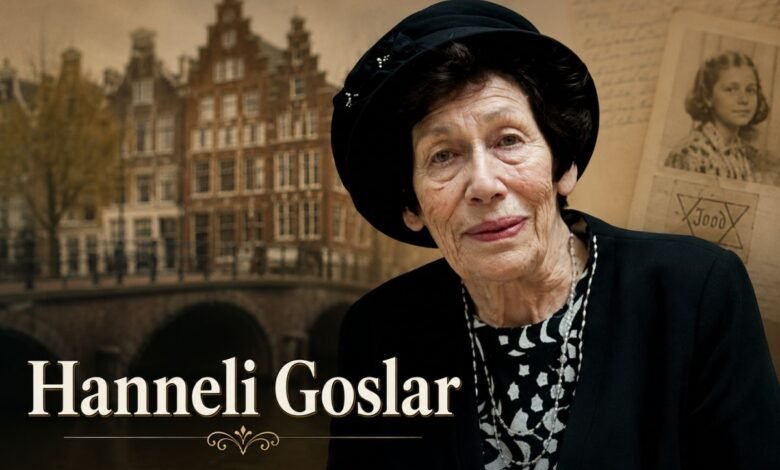
Hanneli Goslar was more than a name connected to Anne Frank. She was a real person, a child of war, a Holocaust survivor, a nurse, a mother, and a powerful witness to one of the darkest chapters in human history. Born as Hannah Elisabeth Goslar, she became widely known by her nickname “Hanneli,” the name Anne Frank used for her beloved childhood friend.
Her story carries deep emotional weight because it connects ordinary childhood memories with the brutal reality of Nazi persecution. Hanneli Goslar grew up alongside Anne Frank in Amsterdam, sharing school days, laughter, friendship, and the innocence of youth before the Holocaust tore their world apart.
Today, Hanneli Goslar is remembered as one of Anne Frank’s closest friends and as the person behind the diary name “Lies Goosens.” Her life remains an important reminder of friendship, survival, courage, and the duty to remember.
Who Was Hanneli Goslar?
Hanneli Goslar was a German-born Jewish woman who later became an Israeli nurse and Holocaust survivor. She was born in Berlin in 1928, during a period when Germany was changing rapidly and dangerously for Jewish families. As Adolf Hitler and the Nazi Party rose to power, Jewish life in Germany became increasingly unsafe.
Her family left Germany and moved to Amsterdam in the Netherlands, hoping to build a safer and more peaceful life. Like many Jewish families at that time, they believed the Netherlands might protect them from the hatred spreading across Europe.
In Amsterdam, Hanneli met Anne Frank. Their friendship began when they were young girls and became one of the most meaningful relationships in Anne’s early life. They attended school together, played together, and shared the small joys of childhood before war changed everything.
The Meaning of the Name “Hanneli”
Although her full name was Hannah Elisabeth Goslar, she was often called Hanneli by family and friends. Anne Frank also used this affectionate nickname in her diary. This small detail makes her feel close and human, not just a historical figure.
The nickname “Hanneli” reflects the warmth of their friendship. It reminds readers that before Anne Frank became a world-famous symbol of the Holocaust, she was a young girl with friends, dreams, and everyday emotions.
Hanneli Goslar and Anne Frank’s Childhood Friendship
The friendship between Hanneli Goslar and Anne Frank is one of the most touching parts of her life story. Both girls came from Jewish families that had fled Germany because of Nazi persecution. In Amsterdam, they became part of a community of refugee families trying to live normally despite rising fear across Europe.
Anne and Hanneli attended kindergarten and later went to school together. They shared the ordinary experiences of young girls, including lessons, games, conversations, and moments of fun. Their friendship was built before the world knew Anne Frank as the author of a diary.
Life Before Hiding
Before Anne Frank’s family went into hiding in 1942, Anne and Hanneli lived near each other and moved within the same social circle. They were school friends during a time when Jewish children were gradually being isolated by Nazi rules.
Jewish children were forced out of normal schools and sent to Jewish-only schools. They faced restrictions on where they could go, what they could do, and how they could live. For Anne and Hanneli, childhood became smaller and more frightening with each new rule.
When Anne disappeared with her family, Hanneli believed that the Franks had escaped to Switzerland. This was the story people were told to protect the secret of the Frank family’s hiding place. Hanneli did not know that Anne was hidden in the Secret Annex in Amsterdam.
“Lies Goosens” in The Diary of Anne Frank
One reason many people search for hanneli goslar is because of her connection to The Diary of Anne Frank. In some published versions of Anne’s diary, Hanneli appeared under the name “Lies Goosens.”
This was a pseudonym used to protect real identities. Over time, researchers and historians confirmed that “Lies Goosens” referred to Hanneli Goslar. This connection made her an important figure for readers who wanted to understand the real people behind Anne Frank’s diary.
Why This Connection Matters
Anne Frank’s diary is not only a historical document. It is also a personal record of feelings, memories, hopes, fears, and relationships. Hanneli’s presence in the diary shows how important friendship was to Anne.
Through Hanneli, readers can see Anne not only as a victim of the Holocaust but also as a lively young girl who loved her friends and missed the world outside hiding.
Arrest and Deportation During the Holocaust
Hanneli Goslar’s own life was also deeply marked by Nazi persecution. In 1943, she and her family were arrested in Amsterdam. They were first sent to Westerbork, a transit camp in the Netherlands, and later deported to Bergen-Belsen, one of the most notorious Nazi concentration camps.
Bergen-Belsen was a place of hunger, disease, fear, and death. Conditions were extremely harsh, and many prisoners died because of illness, starvation, and neglect. Hanneli endured these horrors as a young girl.
A Young Girl Facing Unimaginable Pain
Hanneli lost many things during the Holocaust: safety, childhood, family stability, and the peaceful life she once knew. Yet she survived. Her survival was not just physical; it was emotional and historical. She lived to tell the world what happened.
Her testimony later became valuable because it gave a personal face to history. She did not speak in abstract terms. She spoke as someone who had seen the cruelty of the Holocaust directly.
The Final Meeting with Anne Frank
One of the most heartbreaking moments in Hanneli Goslar’s life was her final contact with Anne Frank at Bergen-Belsen. After years of believing Anne had escaped to Switzerland, Hanneli discovered that Anne was also imprisoned in the camp.
The two friends were separated by a fence. Hanneli could not truly rescue Anne, but she tried to help. According to survivor accounts, she threw a small package of food over the barrier for Anne. This moment has become one of the most emotional memories connected to Anne Frank’s final days.
A Friendship Divided by a Fence
The image of two childhood friends meeting through a camp fence is deeply painful. It represents everything the Holocaust destroyed: families, friendships, childhoods, communities, and futures.
Anne Frank died in Bergen-Belsen in 1945. Hanneli survived, carrying the memory of her friend for the rest of her life.
Life After the War
After the Holocaust, Hanneli Goslar rebuilt her life. She eventually moved to what became Israel and trained as a nurse. Her decision to become a nurse reflected strength, care, and service after years of suffering.
She lived in Jerusalem and raised a family. But she did not remain silent about the past. For decades, she shared her memories with students, historians, writers, and Holocaust education groups.
Becoming a Witness to History
Hanneli Goslar understood that memory was a responsibility. As survivors grew older, their voices became even more important. Her testimony helped keep Anne Frank’s personal world alive and helped educate younger generations about the Holocaust.
She showed that history is not only about dates and numbers. It is about real people with names, families, friendships, and dreams.
Hanneli Goslar’s Memoir and Legacy
Hanneli Goslar’s life story reached many readers through interviews, documentaries, and books. Her memoir, My Friend Anne Frank, helped people understand Anne from the viewpoint of someone who knew her before hiding.
The memoir gives a more personal picture of Anne Frank. It shows Anne as a schoolgirl, a friend, and a child full of energy and personality. It also tells Hanneli’s own story of survival, loss, and memory.
Why Her Legacy Still Matters
Hanneli Goslar died in 2022 at the age of 93, but her voice remains important. Her life reminds the world that Holocaust memory must never become distant or forgotten.
Her legacy is powerful because she connects two worlds: the innocence of childhood friendship and the horror of genocide. Through her story, people can better understand both Anne Frank and the millions of Jewish people affected by the Holocaust.
Quick Info About Hanneli Goslar
| Detail | Information |
|---|---|
| Full Name | Hannah Elisabeth Goslar |
| Known As | Hanneli Goslar |
| Born | 1928, Berlin, Germany |
| Died | 2022 |
| Nationality | German-born Israeli |
| Profession | Nurse |
| Known For | Childhood friend of Anne Frank |
| Diary Connection | Appeared as “Lies Goosens” |
| Holocaust Experience | Westerbork and Bergen-Belsen |
| Later Life | Lived in Jerusalem, Israel |
| Memoir | My Friend Anne Frank |
FAQs About Hanneli Goslar
Who was Hanneli Goslar?
Hanneli Goslar was a German-born Jewish Holocaust survivor, Israeli nurse, and one of Anne Frank’s closest childhood friends. She survived Bergen-Belsen and later shared her memories to help educate the world.
Why is Hanneli Goslar famous?
She is famous because of her close friendship with Anne Frank and because she appeared in Anne’s diary under the name “Lies Goosens.” Her testimony helped preserve Anne Frank’s personal story.
Was Hanneli Goslar really Anne Frank’s friend?
Yes, Hanneli Goslar and Anne Frank were close childhood friends in Amsterdam. They went to school together and knew each other before Anne’s family went into hiding.
What happened to Hanneli Goslar during the Holocaust?
Hanneli Goslar was arrested by the Nazis, sent to Westerbork, and later imprisoned in Bergen-Belsen. She survived the Holocaust, while many others, including Anne Frank, did not.
When did Hanneli Goslar die?
Hanneli Goslar died in 2022 at the age of 93. She left behind an important legacy as a survivor and witness to history.
Conclusion
Hanneli Goslar’s story is one of friendship, survival, pain, and remembrance. She was not only Anne Frank’s childhood friend but also a strong woman who survived the Holocaust and spent much of her life sharing the truth.